Patrick A. McCoy, M.A.
Founder, Researcher, Educator, Artist, and Cultural Reconstruction Specialist
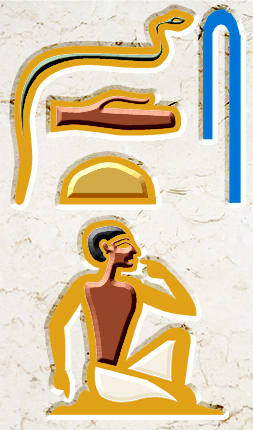
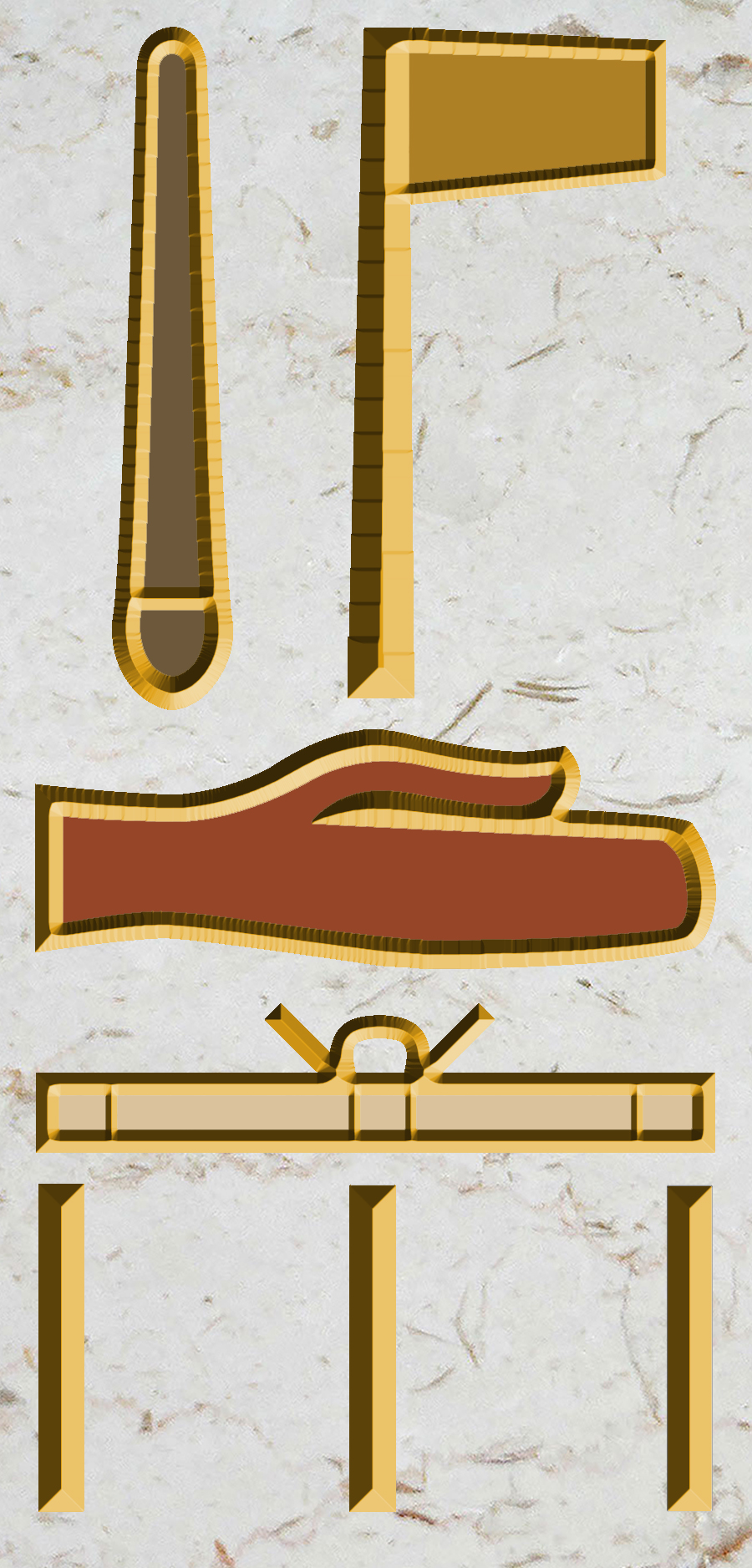
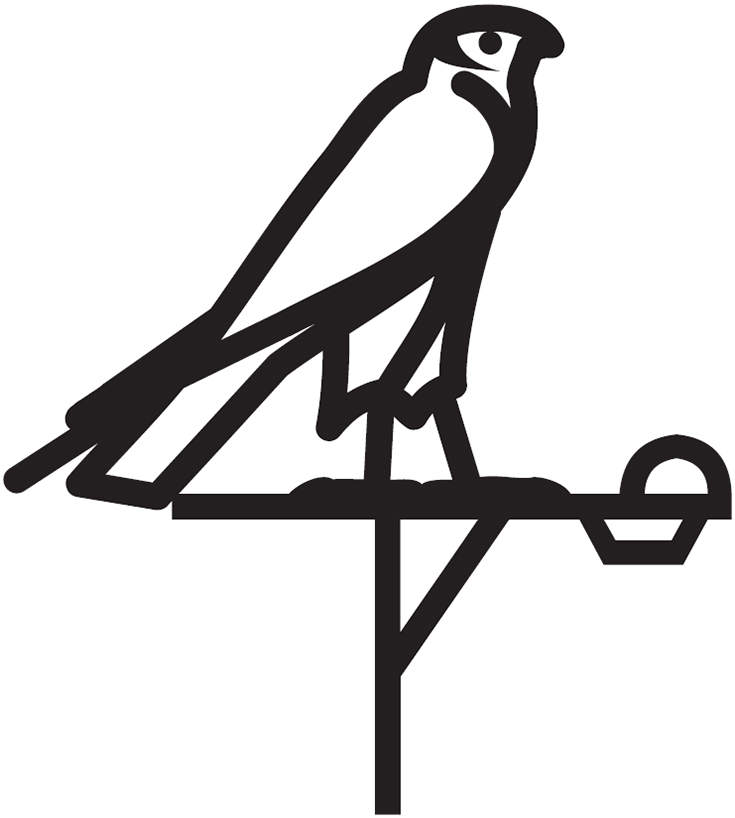
Patrick A. McCoy, M.A., also known by the ancient Egyptian name Pharaoh Har Panabta’wy (“Horus, Lord of the Two Lands”), is the founder of a multidisciplinary effort dedicated to reconstructing, reproducing, and reenacting the culture, language, arts, crafts, and lived experiences of ancient Egypt. His work combines academic research, creative production, experimental archaeology, education, and public outreach to make ancient Egyptian civilization accessible to modern audiences.
His commitment to ancient Egyptian studies began in 2001 and evolved into a formal research and educational organization in 2009. Since then, he has dedicated his work to reconstructing ancient Egyptian culture through scholarly research, experimental archaeology, artistic reproduction, public education, and multimedia production.
With more than two decades of independent research focused on Egyptology, anthropology, language, culture, religion, material arts, and historical reconstruction, Patrick has developed educational resources, documentaries, podcasts, publications, artwork, and physical reproductions designed to bring ancient Egypt to life for modern audiences.
Academic Background
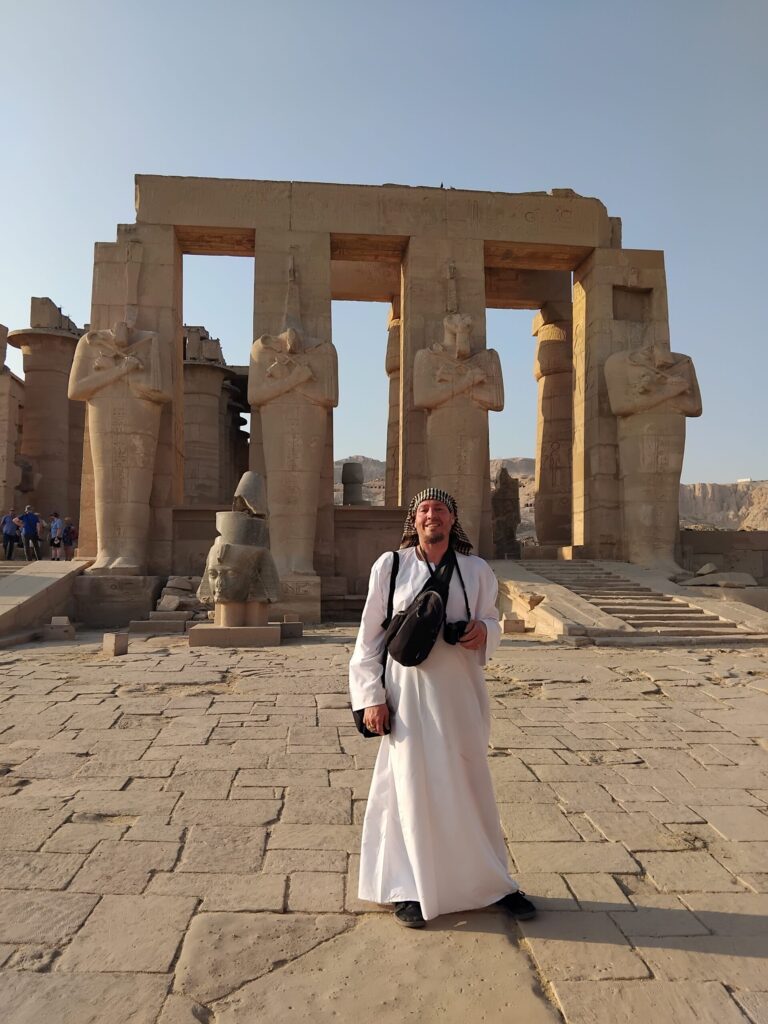
Patrick holds a Bachelor of Arts in Cultural Anthropology from the University of California, Santa Barbara, with studies in Arabic, French, and Middle Eastern Studies. He later earned a Master of Arts in International Psychology with a concentration in Management and Leadership and is currently a Ph.D. Candidate (ABD) in International Psychology: Organizations and Systems at The Chicago School of Professional Psychology. His dissertation research focuses on the psychological well-being of tourist guides in Egypt following the COVID-19 pandemic.
His interdisciplinary education bridges anthropology, psychology, leadership, education, organizational systems, and cross-cultural studies, providing a unique perspective on both ancient civilizations and contemporary cultural preservation.
Ancient Egyptian Language Reconstruction
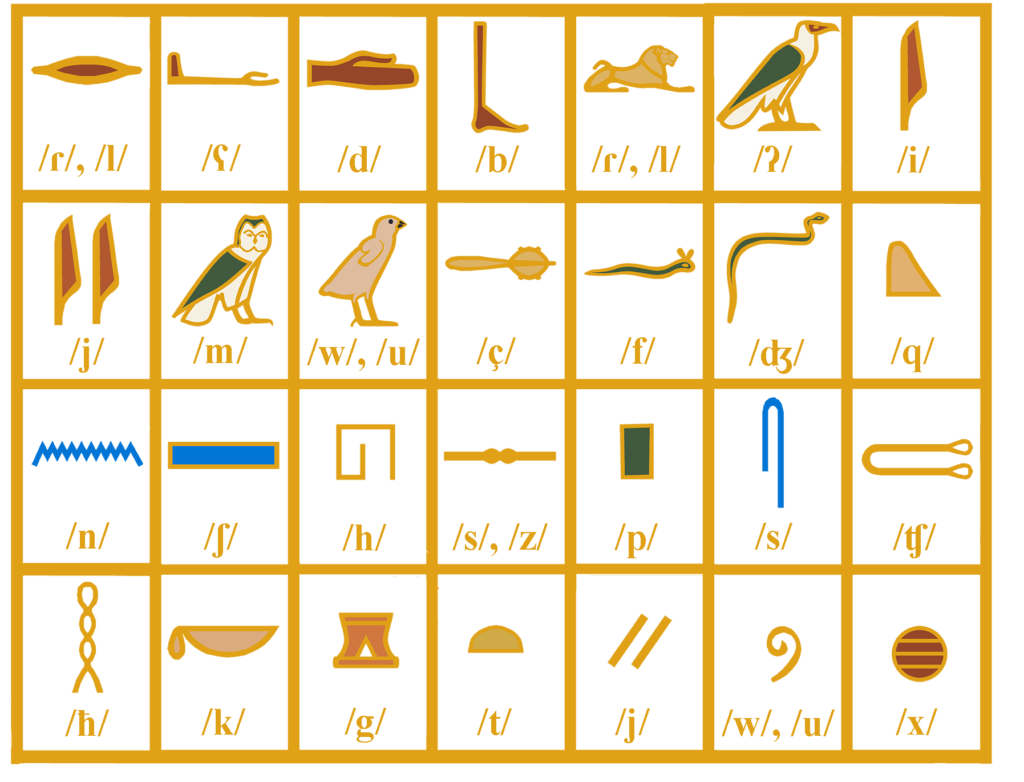
One of Patrick’s primary areas of research is the reconstruction of the ancient Egyptian language as a spoken and living means of communication. Drawing upon Egyptological scholarship, hieroglyphic, hieratic, demotic, and Coptic sources, he investigates methods for restoring pronunciation and practical spoken usage beyond the traditional consonantal framework commonly presented in academic publications.
His work incorporates a vowel reconstruction system associated with linguistic evidence preserved from the Amarna Period and applies that system to educational materials, public presentations, performances, readings, and cultural reenactment. Through this effort, he seeks to make the ancient Egyptian language accessible to modern learners while fostering a deeper appreciation for Egypt’s intellectual and cultural heritage.

Journey to Egypt
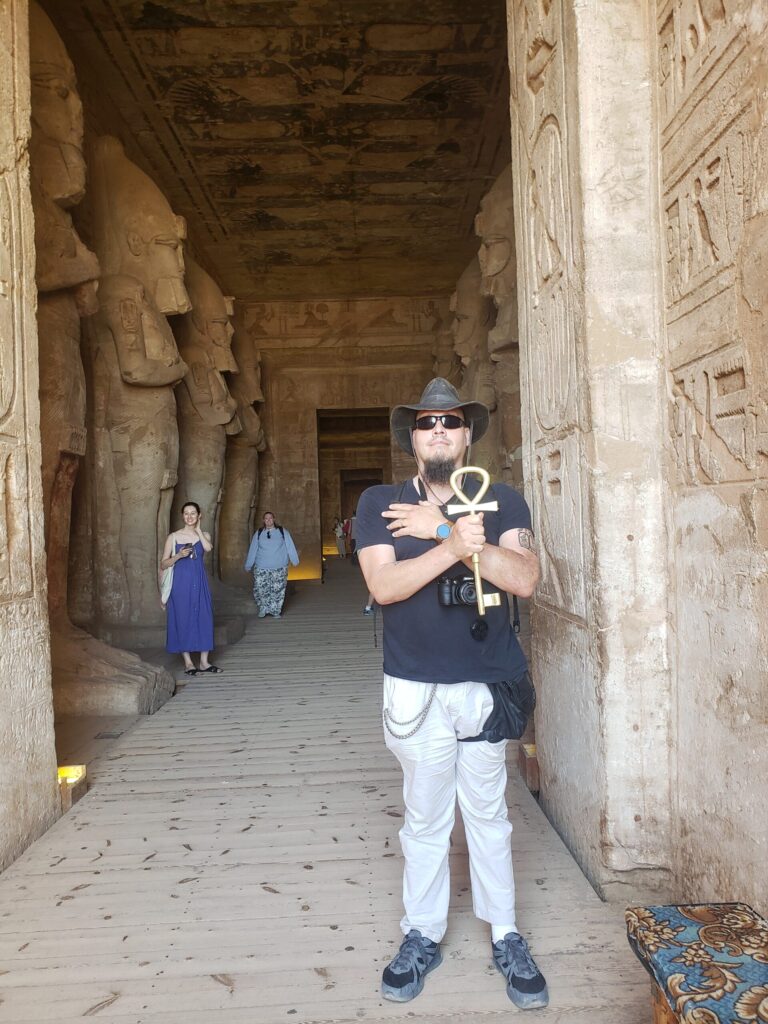
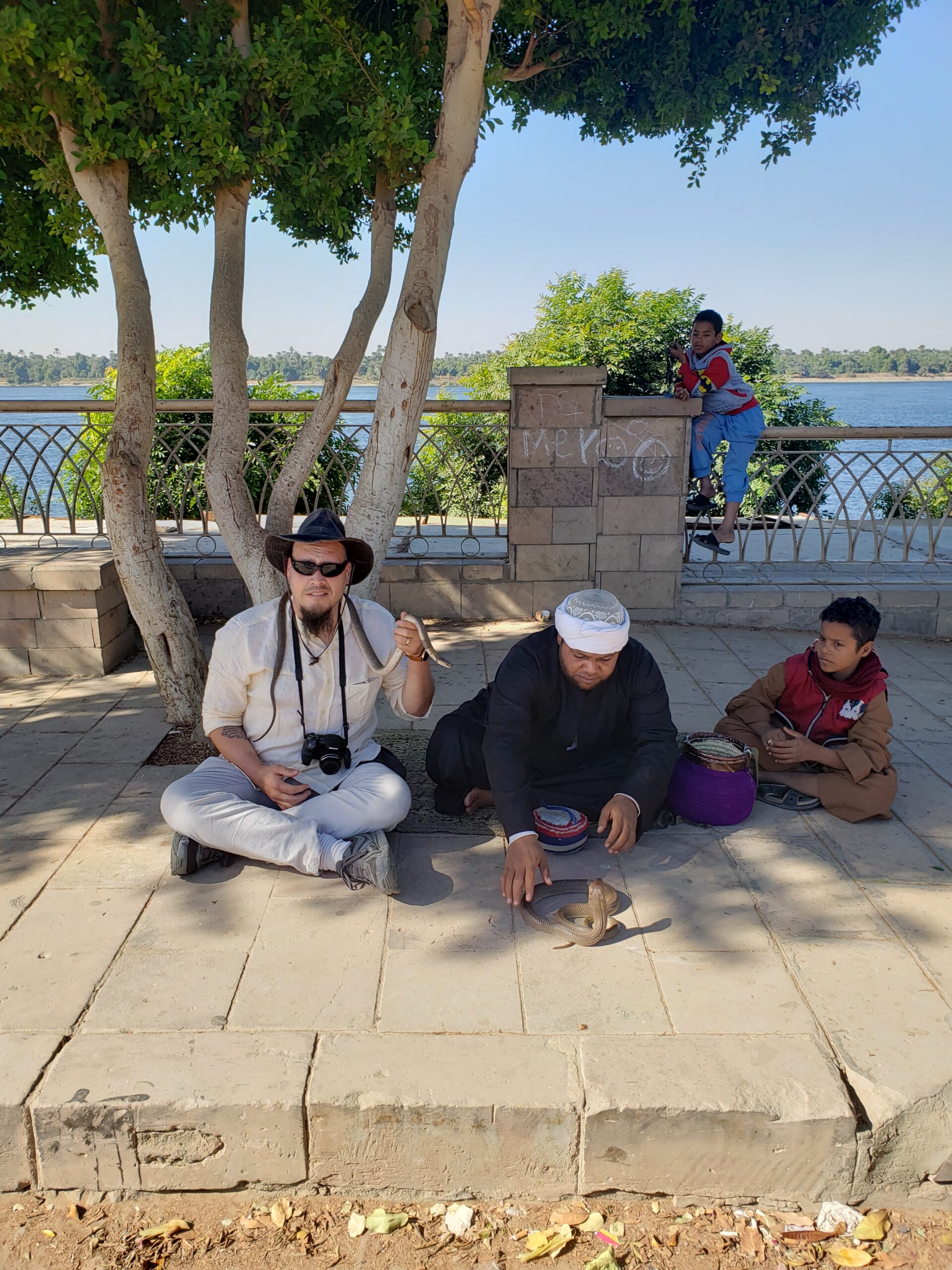
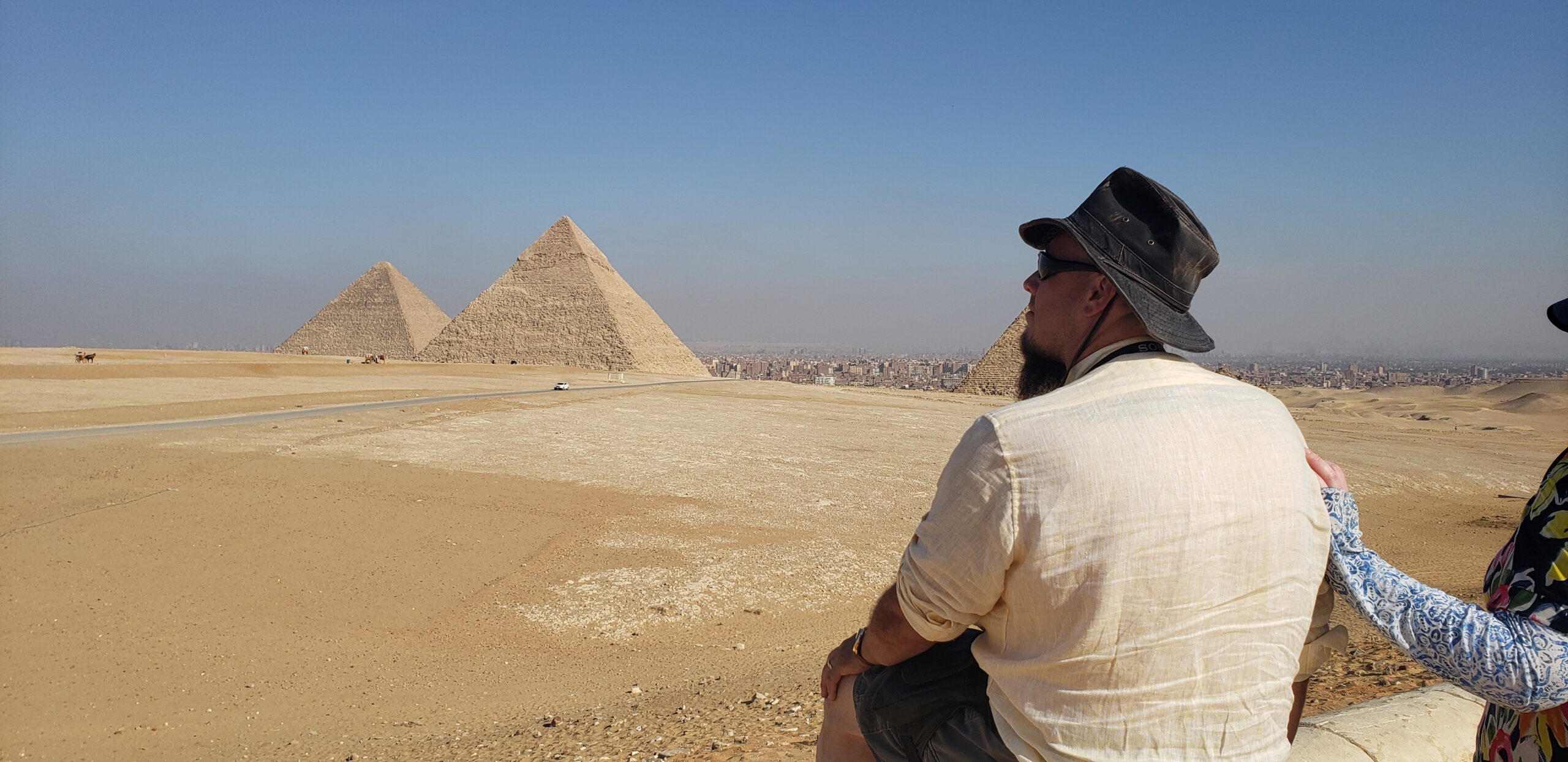
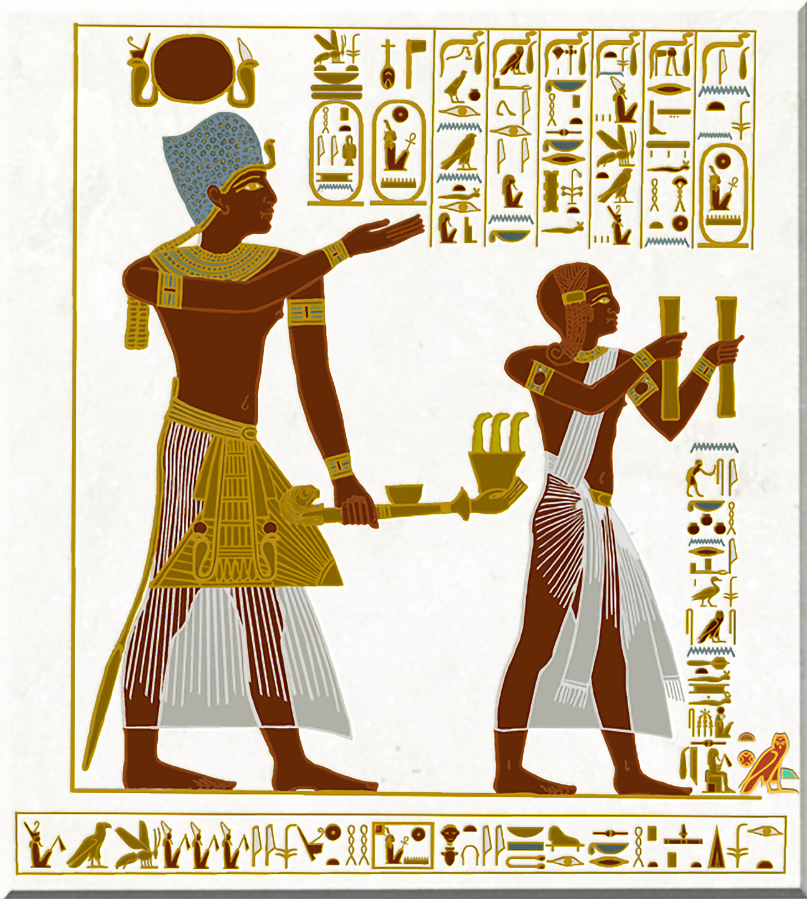
A lifelong fascination with ancient Egypt led Patrick beyond the classroom and into the field. He has traveled to Egypt twice, documenting archaeological sites, temples, museums, monuments, landscapes, artifacts, and contemporary Egyptian culture.
Through photography, videography, interviews, field observations, and research collection, he has assembled an extensive archive of reference materials that continue to guide his reconstruction projects. These experiences provided invaluable firsthand access to locations, cultural traditions, and historical environments that inform his educational programs, artistic creations, and ongoing research.
Preserving Ancient Egypt Through Living Reconstruction
Rather than approaching ancient Egypt solely as a historical subject, Patrick seeks to understand how ancient Egyptians lived, communicated, worshipped, dressed, worked, created art, cared for their health, practiced music, and understood the world around them.
His reconstruction efforts include:
Ancient Egyptian language reconstruction and education
Experimental archaeology and historical reconstruction
Add context to your column. Help visitors understand the value they can get from your products and services.
Traditional clothing and adornment reproduction
Add context to your column. Help visitors understand the value they can get from your products and services.
Ancient cosmetics, perfumes, incense, and skin care products
Add context to your column. Help visitors understand the value they can get from your products and services.
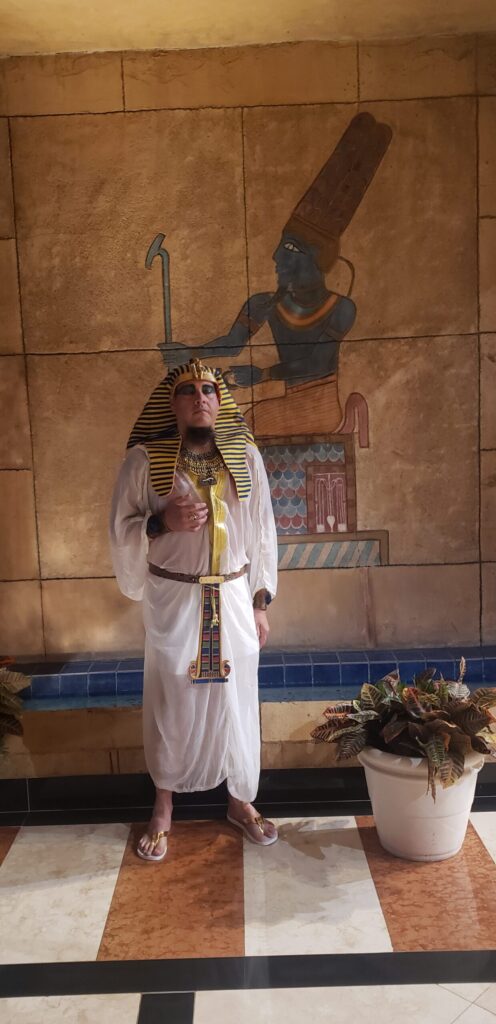
Musical performance and cultural reenactment
Add context to your column. Help visitors understand the value they can get from your products and services.
Educational publishing and curriculum development
Add context to your column. Help visitors understand the value they can get from your products and services.
Documentaries, podcasts, and multimedia production
Add context to your column. Help visitors understand the value they can get from your products and services.
Ancient Egyptian martial traditions and physical culture
Add context to your column. Help visitors understand the value they can get from your products and services.
Creative and Technical Expertise
Patrick’s work combines scholarship with practical creative production. His experience includes graphic design, illustration, photography, videography, audio production, publishing, web development, educational program design, public speaking, online learning, and digital content creation.
Using tools such as Adobe Creative Cloud and modern digital publishing platforms, he translates academic research into engaging educational experiences for students, enthusiasts, researchers, reenactors, and the general public.
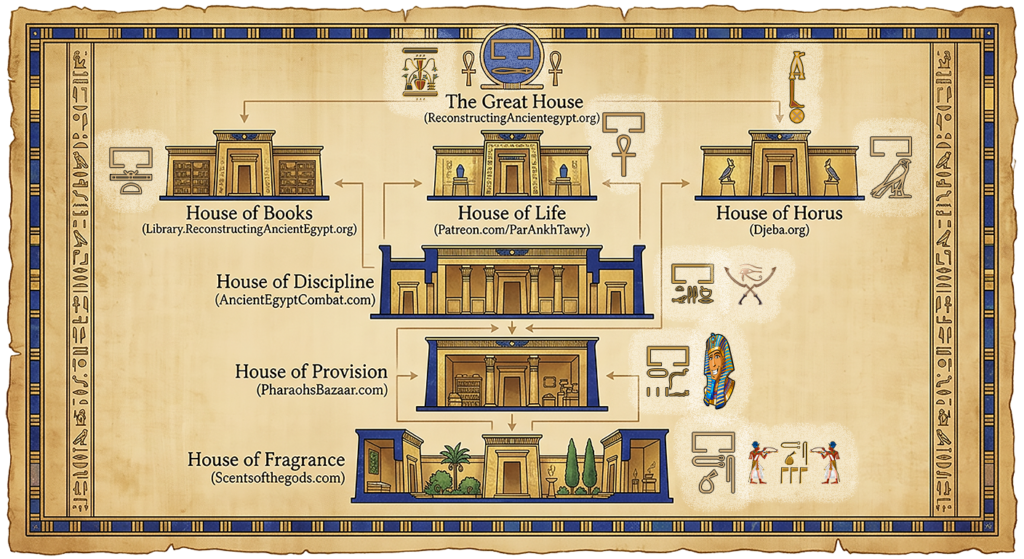
The seven houses of ta’wy
Current Projects
Reconstructing Ancient Egypt
Ta’wy, meaning “The Two Lands,” is the principal cultural reconstruction initiative. Through the Reconstructing Ancient Egypt project, Ta’wy is dedicated to the research, reconstruction, reproduction, and reenactment of ancient Egyptian civilization as a living cultural tradition.
The project explores every aspect of ancient Egyptian life, including language, religion, art, architecture, music, clothing, cosmetics, craftsmanship, education, governance, military traditions, and daily living practices. By combining Egyptological research with experimental archaeology, artisan reproduction, multimedia production, and public education, Ta’wy seeks to transform academic knowledge into immersive cultural experiences.
Serving as the central framework that unites numerous specialized initiatives, Ta’wy provides resources, publications, documentaries, educational programs, reconstructed artifacts, and digital archives that help modern audiences engage with ancient Egypt in meaningful and practical ways.
Ancient Egyptian Digital Library
Par Madja’at, meaning “House of Books,” is the digital library of the Reconstructing Ancient Egypt project. This growing collection provides researchers, students, reenactors, and enthusiasts with access to books, articles, research materials, educational resources, and reference collections related to ancient Egyptian language, history, religion, culture, archaeology, art, and daily life.
The library serves as a central repository for preserving and organizing knowledge that supports the reconstruction and study of ancient Egyptian civilization while making valuable educational resources more accessible to the public.
Par Ankh of Ta’wy
The House of Life (Par Ankh) is a community-supported educational initiative dedicated to ancient Egyptian studies, language reconstruction, cultural preservation, experimental archaeology, and the creation of educational resources, media, and reproductions inspired by ancient Egypt. Through patron support, the project helps sustain ongoing research, publications, videos, podcasts, courses, and public outreach efforts.
Djeba – Reconstruction of the Temple of Horus at Edfu
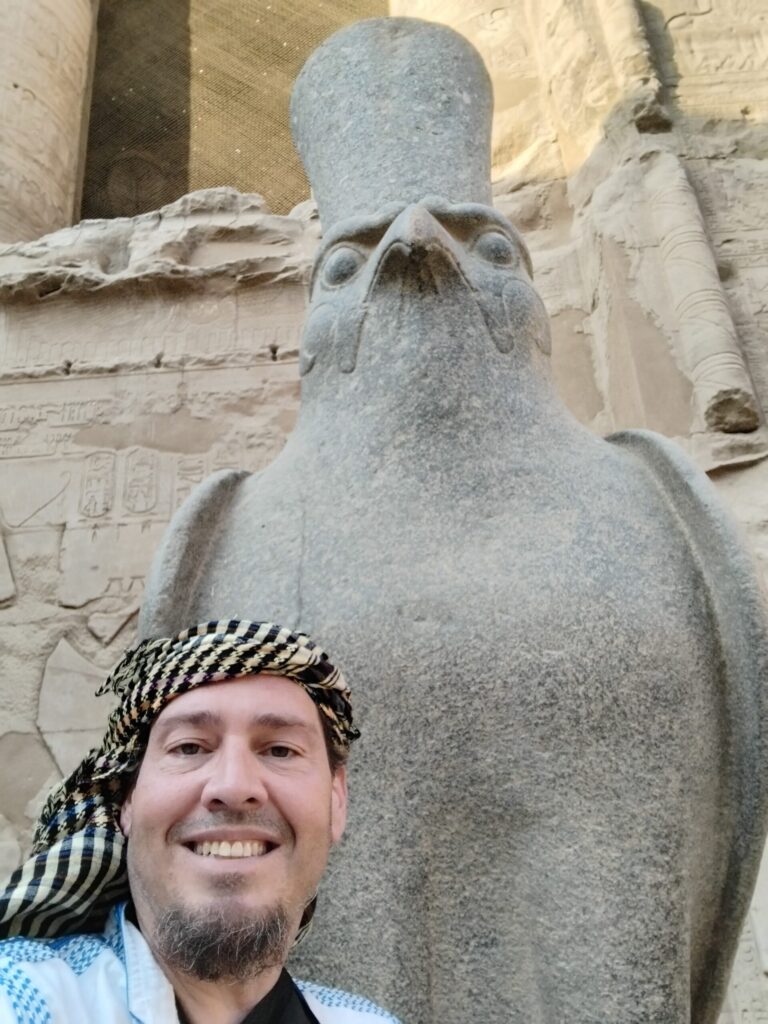
Djeba is a long-term cultural reconstruction project focused on recreating the Temple of Horus at Edfu as a living educational and ceremonial institution. Inspired by one of the best-preserved temples of ancient Egypt, the project explores the architecture, religion, language, rituals, festivals, administration, education, and daily functions of an ancient Egyptian temple community.
Through historical research, language reconstruction, educational programming, digital content, publications, reenactment, and experimental archaeology, Djeba seeks to provide a modern platform for understanding how Egyptian temples functioned as centers of worship, learning, culture, governance, and community life.
The project serves as both a research initiative and an educational framework for preserving and sharing the intellectual, spiritual, and cultural heritage embodied by the Temple of Horus at Edfu.
Aha’ Kamat – Ancient Egyptian Combat
Aha’ Kamat, meaning “Combat of Egypt,” is a cultural reconstruction project dedicated to the study and revival of ancient Egyptian martial traditions. Through the examination of archaeological evidence, artistic depictions, historical records, and experimental archaeology, the project explores how ancient Egyptians trained, fought, hunted, and protected the Two Lands.
The project investigates weapons, military organization, archery, wrestling, stick fighting, chariot warfare, physical conditioning, and combat-related aspects of daily life in ancient Egypt. By combining scholarly research with practical reconstruction and educational outreach, Aha’ Kamat seeks to preserve and share Egypt’s martial heritage with modern audiences.
As part of the broader Ta’wy initiative, Aha’ Kamat contributes to a deeper understanding of ancient Egyptian society by reconstructing the skills, disciplines, and traditions that supported the defense and stability of one of the world’s longest-lasting civilizations.
Pharaoh’s Bazaar
Pharaoh’s Bazaar is the marketplace of the Ta’wy initiative, offering handcrafted reproductions, educational resources, artwork, books, media, and cultural creations inspired by ancient Egypt. The project supports the preservation and reconstruction of ancient Egyptian civilization by transforming research into tangible products that can be studied, experienced, and enjoyed by modern audiences.
Items may include reconstructed jewelry, clothing, cosmetics, fragrances, ritual objects, artwork, publications, digital resources, and other products created through historical research, experimental archaeology, and artisan craftsmanship. Each offering is designed to help bring the culture, aesthetics, and daily life of ancient Egypt into the modern world.
As the commercial branch of the broader Ta’wy mission, Pharaoh’s Bazaar helps sustain ongoing research, education, media production, cultural reconstruction, and public outreach initiatives.
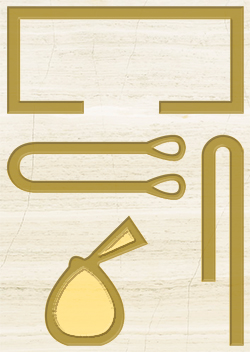
Satjya Natjaru: Ancient Egyptian Beauty
Satjya Natjaru: Ancient Egyptian Beauty is dedicated to reconstructing and reviving the beauty traditions of ancient Egypt. Inspired by archaeological discoveries, historical texts, artistic depictions, and experimental research, the project explores how ancient Egyptians approached cosmetics, skin care, hair care, adornment, fragrance, and personal presentation.
The project investigates the ingredients, techniques, and cultural meanings behind ancient Egyptian beauty practices, reproducing products and methods that reflect the sophistication and elegance of one of history’s most influential civilizations. Through research, education, artisan craftsmanship, and authentic reproductions, Satjya Natjaru: Ancient Egyptian Beauty seeks to make ancient Egyptian self-care traditions accessible to modern audiences.
As part of the broader Ta’wy initiative, the project contributes to a deeper understanding of daily life, identity, health, and aesthetics in ancient Egypt while celebrating the enduring legacy of Egyptian beauty culture.
Vision
The mission behind Patrick’s work is to transform scholarly research into living cultural experiences that inspire curiosity, understanding, and appreciation for ancient Egypt.
By combining academic rigor with hands-on reconstruction, he seeks to help people move beyond simply reading about history and instead experience aspects of one of humanity’s most influential civilizations through language, art, music, craftsmanship, education, and cultural practice.
Through ongoing research, educational outreach, media production, and artisan craftsmanship, Patrick continues to build resources that connect the modern world with the enduring legacy of ancient Egypt.
Discover the Institutions of Ta’wy
Journey through the reconstructed world of ancient Egypt—from language and literature to temples, beauty traditions, martial arts, education, and artisan craftsmanship. Explore our growing collection of projects dedicated to preserving, studying, and bringing ancient Egyptian civilization back to life.
Help preserve and reconstruct ancient Egyptian culture for future generations through research, education, craftsmanship, and community participation.