Sacred Fragrance in Daily Life and Ritual
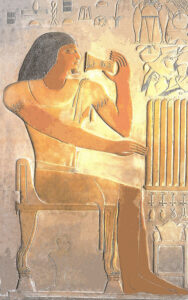
In ancient Egypt, scent was essential to both daily life and sacred practice. From royal courts to humble households, fragrant oils and incense were worn on the body, burned in temples, and used in medicine. Tomb inscriptions and papyri preserve recipes for personal perfumes, ceremonial incense, and healing unguents—often recorded as cherished possessions of their owners.
Doctors employed fragrance in external medicine, while households used scented oils to mark festivals, celebrations, and religious holidays. From Cleopatra—who famously scented the sails of her pleasure barge with Susinon—to a baker’s wife anointing herself with myrrh oil during a feast of Hathor, aroma brought joy, beauty, and meaning to everyday life.
The gods themselves were honored with fragrance. Incense, oils, and unguents were offered daily to sacred statues and temples. Pharaohs donated vast quantities of rare ingredients—frankincense, cinnamon, resins, and spices—to maintain divine favor and ritual purity.
These aromatic preparations follow AncientStyle™—a ritual‑based approach inspired by Ancient Egyptian traditions, where scent serves a sacred and intentional role.
Reconstructed from Ancient Sources
At Satjya Natjaru – Scents of the Gods, we research and reconstruct these ancient aromas using surviving Egyptian sources found in tombs, temples, and papyri. Our fragrance oils are based on documented Egyptian formulae rather than modern perfume conventions.
We prepare our oils using heat‑steeping methods, in which botanical ingredients are gently heated with oil over extended periods—an approach described in ancient sources and consistent with Egyptian practice. This method differs from modern perfumery, which relies on distilled essential oils that were not developed until much later in history.
As a result, our aromas are subtle in the bottle, but they develop more fully once warmed, shaken, and applied to the skin—behaving more like ancient unguents than modern sprays.
AncientStyle Fragrance, Not Modern Perfume
These aromas are intentionally different from modern perfumes.
Ancient Egyptian fragrances were designed to evolve on the body, not overwhelm the senses at first application. While ancient perfumes often required reapplication, they were economical, long‑lasting in use, and deeply connected to ritual and identity.
This method reflects a ritual‑based approach central to AncientStyle™, preserving the character of ancient scent creation.
Solid Unguents
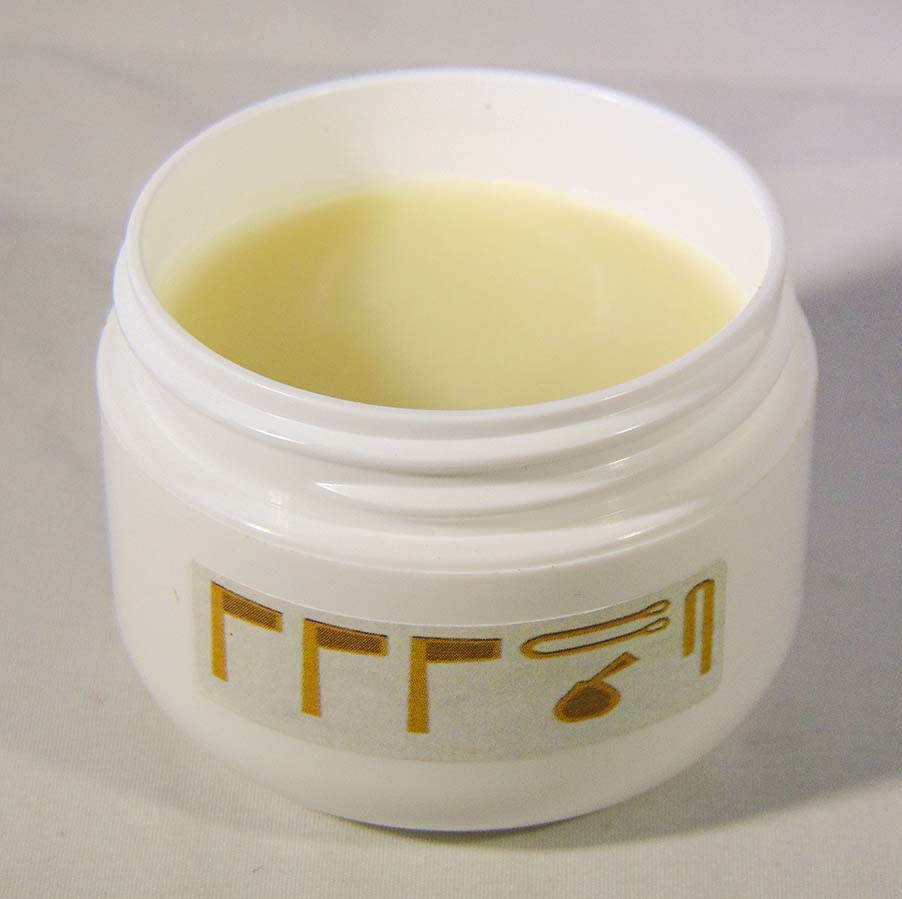
Concentrated Aromas in Ancient Egyptian Tradition
Solid unguents were a foundational form of aromatic expression in Ancient Egypt. By combining fragrant oils with natural waxes, these preparations created a stable, transportable medium that released scent gradually through warmth and contact with the skin.
Unlike liquid perfumes, solid unguents were valued for their longevity and controlled diffusion. Their firm yet glideable texture allowed aroma to unfold slowly, emphasizing depth and presence rather than immediacy. This made them especially suited for intentional use—during grooming, preparation, or ritual moments.
Beeswax played an essential role in these formulations, providing structure while preserving the character of complex aromatic blends. The resulting consistency closely reflects descriptions and material evidence associated with ancient Egyptian ointments and scent preparations.
Solid unguents were applied sparingly to the body, hands, or hair, allowing scent to evolve naturally over time. Their use emphasized restraint, awareness, and ritual pacing rather than excess.
This form reflects the AncientStyle™ approach, where aroma is not worn casually, but engaged with deliberately—honoring ancient methods that treated scent as a lasting presence rather than a fleeting effect.
Liquid Oils
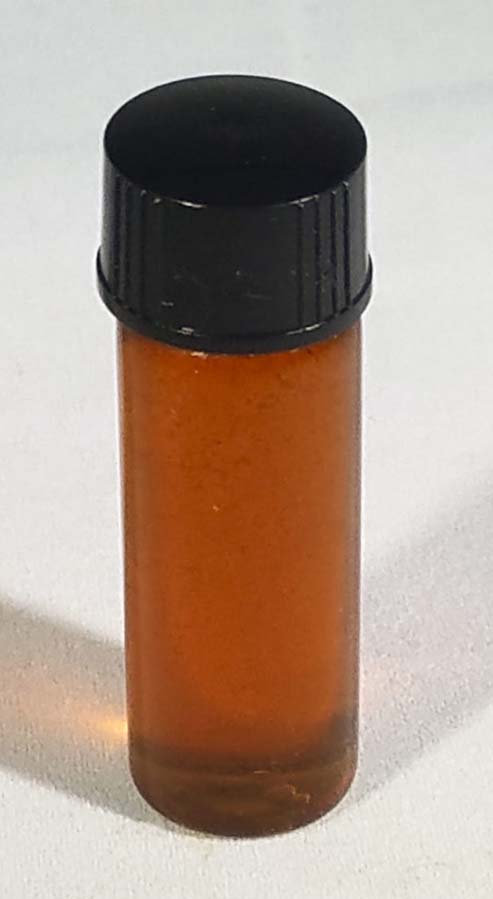
Oil‑Based Aromas in Ancient Egyptian Practice
Liquid aromatic oils were the most widely used fragrance form in Ancient Egypt. Rather than alcohol‑based perfumes, scents were created by infusing resins, botanicals, and spices into carrier oils, producing preparations that developed gradually on the skin.
These oils were applied to the body, hair, and hands as part of daily grooming and ceremonial preparation. Their oil base allowed aroma to unfold slowly, interacting with warmth and movement rather than dispersing immediately into the air.
Ancient methods of preparation emphasized infusion and heat‑steeping, producing scents that were subtle at first contact and fuller as they settled. This approach favored depth, longevity, and restraint—qualities that distinguished ancient aromatic oils from modern perfumes.
Within the AncientStyle™ approach, liquid oils represent a living form of scent: adaptable, intimate, and intended to be experienced over time rather than at first impression.
Incense
Scent as Offering, Atmosphere, and Ritual Presence
Incense held a central place in Ancient Egyptian aromatic culture. Burned in temples, homes, and ceremonial spaces, incense was used to prepare environments, honor the divine, and mark transitions throughout the day.
Rather than personal adornment, incense functioned as an atmospheric scent—one that shaped space and ritual context. Resinous and complex, these aromatic blends were valued for their ability to linger, creating continuity between action, intention, and place.
Incense was often burned according to time and purpose, reinforcing rhythm and order. The slow release of aroma through heat mirrored the broader Ancient Egyptian relationship with scent: deliberate, structured, and meaningful.
This form reflects the AncientStyle™ approach, where aroma is not only worn, but released into space—transforming surroundings into places of presence and preparation.
Kyphi (Ka’apat): The Sacred Incense

Known to the Greeks as Kyphi, and to the Egyptians as Ka’apat, this legendary incense is among the oldest recorded aromatic compounds in history. Ka’apat was burned in temples during evening rituals to prepare the gods for rest and renewal.
Satjya Natjaru has reconstructed Ka’apat using the ancient recipe preserved at the Ointment Workshop of the Temple of Horus in Edfu. References to this incense appear throughout Egyptian history:
- In the Pyramid Texts, where it is listed among offerings pleasing to the deceased king
- In the Ebers Papyrus, where it is used for household censing and medicinal purposes
- In Papyrus Harris I, documenting offerings made by Ramses III to the temples
The Egyptian verb ka’ap, meaning “to cense or burn incense,” reveals Ka’apat as one of the most ancient and enduring sacred fragrances of Egypt.
Incense such as Kyphi embodies the AncientStyle™ philosophy, where aroma is used to prepare, honor, and transform space.
Khoiak: The Season of Renewal and Sacred Fragrance

Khoiak was one of the most important sacred seasons in ancient Egypt. Observed during the final month of the Nile’s inundation, Khoiak marked a time of death, renewal, and rebirth, centered on the mysteries of the god Osiris.
As the floodwaters receded and fertile silt was revealed for planting, Egyptians reenacted the mythic death and regeneration of Osiris through elaborate temple rituals. These ceremonies reflected the natural cycle of the land itself—the burial of seed, its germination, and the promise of new life.
During Khoiak, temples across Egypt created mummiform figures of Osiris made from earth and grain, which were watered, allowed to sprout, and then ritually buried. These “vegetative Osiris” forms symbolized resurrection, agricultural fertility, and cosmic balance. The rites culminated in the raising of the Djed pillar, representing the restored backbone of Osiris and the return of stability to the world.
[ucl.ac.uk]
Fragrance and Ritual in Khoiak
Fragrance played a vital role throughout the Khoiak ceremonies. Oils, incense, and aromatic resins were used to purify sacred spaces, anoint ritual objects, and accompany the mysteries performed within temple precincts.
The Osirian rituals of Khoiak were among the most secret and sacred in Egyptian religion. While public processions took place, many rites were reserved for priests and performed behind temple walls. These mysteries emphasized transformation rather than spectacle—renewal achieved through careful ritual, material preparation, and divine presence.
[en.wikipedia.org]
Khoiak as Inspiration
The aromas associated with Khoiak are traditionally deep, resinous, earthy, and solemn—reflecting themes of burial, regeneration, and continuity. Rather than bright or celebratory scents, Khoiak fragrances evoke introspection, grounding, and reverence.
At Scents of the Gods, Khoiak‑inspired aromas draw upon these themes, honoring the ancient season through fragrance designed for intentional use, ritual atmosphere, and contemplative beauty.
Mendesian: Egypt’s Most Famous Perfume

The Mendesian was among the most renowned perfumes of the ancient world. Originating in the city of Mendes (modern Tell Timai) in the Nile Delta, it was celebrated throughout Egypt and the wider Mediterranean for its richness, longevity, and complexity.
Classical writers including Pliny the Elder and Dioscorides described the Mendesian as the finest perfume of its kind—an elite fragrance associated with royalty, diplomacy, and high status. Unlike modern alcohol‑based perfumes, the Mendesian was an oil‑based unguent, designed to cling to the skin and release its aroma slowly over time. [bigthink.com]
Ingredients and Preparation
Although no complete Egyptian recipe survives, Greco‑Roman sources consistently describe the Mendesian as being made from a base of balanos oil (derived from the desert date tree), infused with myrrh, resin, and warm spices such as cinnamon or cassia. These ingredients were gently heated and steeped together, producing a thick, enduring fragrance with a sweet, spicy, and faintly musky character.
Modern archaeological discoveries at Tell Timai—including perfume vessels, amphorae, and residue—confirm that Mendes was a major center of perfume production. Experimental reconstructions based on these finds and ancient texts show that Mendesian‑style perfumes were stronger and longer‑lasting than most modern fragrances, a quality already noted in antiquity. [smithsonianmag.com], [hawaii.edu]
Mendesian and Royal Use
The Mendesian perfume is closely associated with Cleopatra VII, whose use of fragrance was legendary. Ancient authors recount how scent was used to announce her presence and enhance diplomatic encounters. While no source states definitively which perfumes she wore, Mendesian was widely regarded as the most prestigious fragrance available in her time and is frequently cited as a likely candidate.
In the ancient world, perfume was not merely cosmetic—it was a statement of power, wealth, and refinement. To wear Mendesian was to participate in a tradition of elite Egyptian perfumery known across cultures. [bigthink.com]
Mendesian as Inspiration
Mendesian‑inspired aromas are traditionally warm, resinous, and opulent, balancing sweetness with depth. They evoke luxury without sharpness, unfolding gradually on the skin rather than announcing themselves all at once.
At Scents of the Gods, Mendesian fragrances are created in the AncientStyle™, honoring historical materials and behavior rather than modern perfume conventions. These aromas are intended for intentional wear, ritual use, and historical appreciation, reflecting one of Egypt’s most celebrated contributions to the art of scent.
Frankincense

Frankincense is a pale, resinous gum obtained from Boswellia trees native to southern Arabia and the Horn of Africa. In antiquity, it was among the most highly prized aromatics, valued not only for its luminous, citrus‑resin scent but also for its powerful symbolic associations with purity, divinity, and transformation. In ancient Egypt, frankincense was considered a substance of the gods; temple inscriptions and classical writers record its daily use in ritual offerings, particularly at dawn, when it was burned to awaken the deity and purify sacred space. [ancientegy…line.co.uk], [Frankincen…red Scents]
Because frankincense trees did not grow naturally in Egypt, the resin was imported through long‑distance trade networks, most famously from the Land of Punt. Reliefs from the mortuary temple of Queen Hatshepsut depict expeditions returning with sacks of incense and even living trees, underscoring both the economic and religious importance of frankincense to the Egyptian state. Its foreign origin enhanced its prestige, marking it as an exotic and potent offering suitable for gods and kings alike. [en.wikipedia.org], [storymaps.arcgis.com]
Ritually, frankincense smoke was believed to carry prayers heavenward and to create an atmosphere pleasing to the gods. Egyptian texts describe incense as “the scent that brings the gods to life,” and frankincense in particular was associated with light, solar deities, and the maintenance of cosmic order (ma’at). Beyond temple use, the resin also played a role in funerary contexts: it was burned during burial rites and used in embalming practices to purify, preserve, and protect the body on its journey to the afterlife. [ancientegy…line.co.uk], [thesmokewalkers.com]
The enduring significance of frankincense lies in this convergence of scent, ritual, and meaning. More than a fragrance, it functioned as a material bridge between human and divine realms—its rising smoke a visible sign of communication, purification, and sacred presence. This symbolic power ensured frankincense a central role in religious practice for millennia, extending well beyond Egypt into the wider ancient Mediterranean and Near Eastern worlds. [kohzen.com], [laphamsquarterly.org]
Myrrh

Myrrh is a dark, aromatic gum resin exuded by several species of Commiphora trees native to arid regions of eastern Africa and southern Arabia. Compared to frankincense, myrrh produces a heavier, more bitter scent—earthy, balsamic, and resinous—qualities that shaped both its ritual symbolism and practical uses in the ancient world. In ancient Egypt, myrrh was closely associated with the body, mortality, and transformation, occupying a central role in funerary rites, temple offerings, and medicinal preparations. [en.wikipedia.org], [globalegyp…museum.org]
Like frankincense, myrrh was not indigenous to Egypt and was imported through long-distance trade, particularly from the Land of Punt. Reliefs from the reign of Queen Hatshepsut depict myrrh trees and resin being transported back to Egypt, emphasizing the resin’s value and its importance to state-sponsored religious practice. Egyptian texts refer to myrrh as a substance suitable for anointing divine images and sacred bodies alike, reinforcing its role as a material that mediated between human, divine, and deceased realms. [globalegyp…museum.org], [ancientara…uma-num.fr]
In temple ritual, myrrh was commonly burned later in the day, complementing the morning use of frankincense. Classical sources and Egyptian records indicate that myrrh was associated with specific deities—most notably Hathor—and was used in ceremonies concerned with renewal, healing, and protection. Its smoke was believed to purify spaces not through lightness or ascent, but through grounding and containment, making it particularly appropriate for rites focused on restoration and balance. [ancientegy…line.co.uk]
Myrrh’s most enduring association, however, lies in funerary practice. It was a key ingredient in embalming substances, anointing oils, and burial rituals, valued for both its preservative properties and its symbolic role in preparing the dead for the afterlife. Applied to the body during mummification and burned during burial ceremonies, myrrh marked the transition from living flesh to eternal form. In this context, the resin functioned as a protective and consecrating agent, ensuring the integrity of the body and the safe passage of the soul. [scienceinsights.org], [ancientara…uma-num.fr]
Through its weight, scent, and ritual application, myrrh came to embody themes of endurance, purification, and sacred passage. Where frankincense signaled divine presence and ascent, myrrh anchored ritual in the realities of the body and death, completing a symbolic pairing that remained central to religious practice in Egypt and across the ancient Near East for millennia. [kohzen.com]
Susinon

Susinon was a prestigious perfumed oil of ancient Egypt, best understood as a sacred lily unguent rather than a simple fragrance. Its name is derived from the Egyptian and Greek traditions surrounding susinum—an oil infused with lilies and other aromatics—and it was closely associated with purity, renewal, and divine beauty. Unlike resins such as frankincense and myrrh, which were burned, susinon was applied to the body, sacred objects, and temple statuary, marking it as an oil of presence and embodiment rather than ascent or transition. [Susinon | Word]
In religious contexts, susinon functioned as an anointing oil used to consecrate what was already sacred. Textual and material evidence indicates that lily-based oils were employed in temple rituals, festivals, and elite funerary practices, particularly those concerned with rebirth and regeneration. The lily itself carried strong symbolic weight in Egypt, associated with freshness, fertility, and cyclical renewal, making susinon especially appropriate for rites that emphasized restoration and divine favor.
Susinon was also a luxury substance, requiring large quantities of botanical material and complex preparation. Its production reflects the sophistication of Egyptian perfumery, in which oils served not merely cosmetic purposes but acted as carriers of ritual meaning. Applied to skin, hair, and ceremonial implements, susinon created a scented boundary between the ordinary and the sacred, transforming the individual or object into a suitable vessel for ritual participation.
Within the broader aromatic system of ancient Egypt, susinon complemented resins rather than replacing them. Where frankincense and myrrh structured ritual time through smoke and scent, susinon anchored ritual space through touch and presence. It embodied the ideal of divine beauty made manifest—fragrance not rising toward the gods, but dwelling among them.
Experience the Aromas of the Gods
Each aroma we create reflects a specific historical tradition—personal adornment, temple ritual, medicine, or celebration. Together, they form a living connection to the scented world of ancient Egypt.
Every fragrance is shaped by the AncientStyle™ approach, honoring ancient scent rituals while remaining accessible for modern use.
Bath. Beauty. Aromas of Ancient Egypt.